Analyzing Reward Systems in Live Tennis Wagers Against Horse Racing Track Traditions
Gisela Peters · Jul 7, 2026

Analyzing Reward Systems in Live Tennis Wagers Against Horse Racing Track Traditions
Live tennis betting operates through constantly shifting odds that reflect real-time match developments while horse racing tracks rely on established pari-mutuel pools and fixed-odds frameworks that settle after each race concludes. Data from multiple jurisdictions shows these two formats handle risk allocation and final settlements through distinct mathematical models that influence how bettors receive returns.
Core Mechanics of In-Game Tennis Payout Calculations
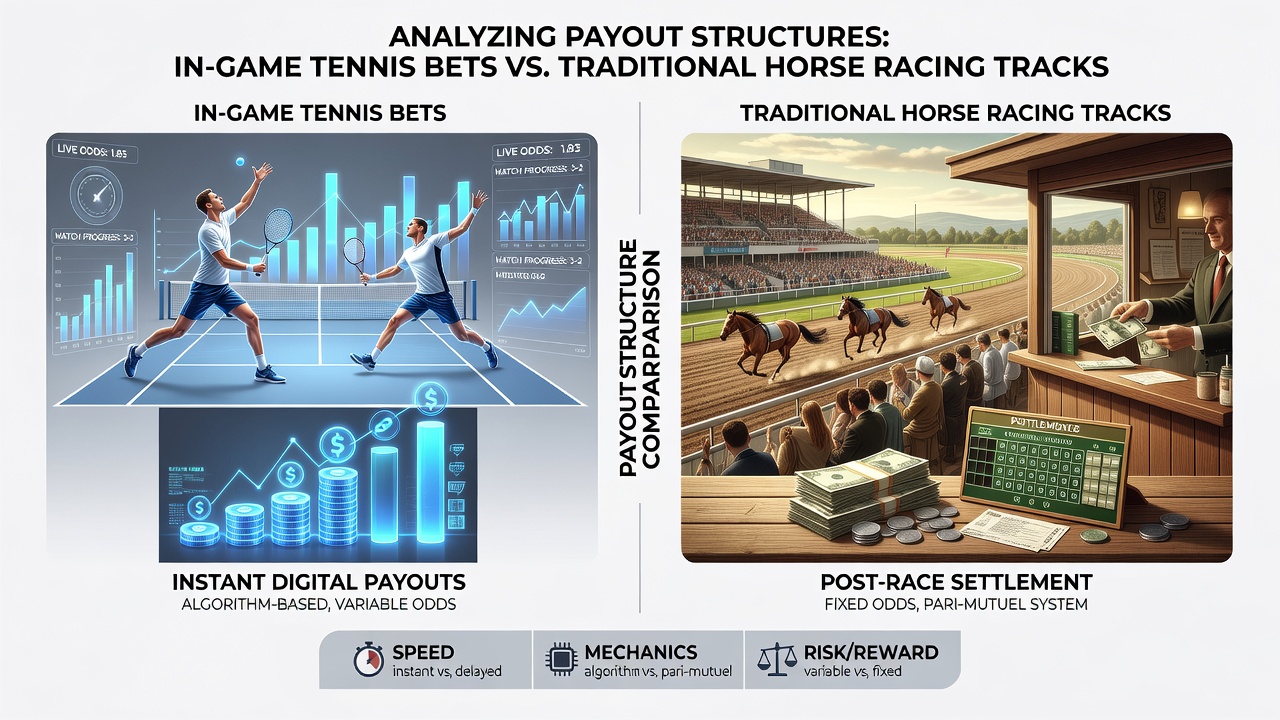
Operators adjust odds continuously during points and games based on serve percentages, break-point conversion rates, and fatigue indicators that emerge as matches progress. A player leading 40-15 on serve might see implied probabilities shift within seconds once the next rally begins, and software algorithms recalculate payouts to maintain house margins that typically range between 3 and 7 percent according to industry reports. Bettors who place wagers mid-set therefore lock in prices that can improve or deteriorate before the next point finishes, creating a dynamic environment where timing directly affects realized returns.
Research from the Alcohol and Gaming Commission of Ontario indicates that in-play tennis markets often settle within 30 seconds of a point ending when electronic scoring systems feed data directly into betting engines. This speed allows platforms to release funds almost immediately after a game or set concludes, whereas traditional settlement delays at tracks stem from manual verification of photo finishes and objection periods that can extend several minutes.
Established Payout Structures at Horse Racing Tracks
Most tracks operate pari-mutuel systems where all wagers on a single race combine into a pool and the track deducts a fixed percentage before distributing the remainder among winning tickets. The takeout rate commonly sits between 15 and 25 percent depending on the jurisdiction and bet type, which means the final payout per dollar wagered fluctuates with total pool volume rather than fixed odds. Bettors receive dividends calculated only after the race official confirms results, and larger pools tend to compress payouts even for heavily favored runners because more money shares the same return.
Some venues supplement pari-mutuel pools with fixed-odds options that guarantee a predetermined return regardless of final pool size. These fixed offerings mirror the structure seen in tennis markets yet still incorporate the track's overall takeout, which remains higher than the margins observed in digital tennis platforms. Historical records from the Victorian Commission for Gambling and Liquor Regulation show that average returns per dollar bet on thoroughbred races have stayed consistent across decades despite changes in total handle.
Comparative Settlement Timing and Margin Impacts
Settlement speed creates the clearest operational difference between the two formats. Tennis platforms process most in-game results automatically through integrated scoring feeds, releasing credits before the next game starts in many cases. Horse racing payouts require stewards to clear the result, which introduces a mandatory pause even when electronic timing systems capture the finish line. Observers note that this pause protects against rare but costly errors while simultaneously extending the period between wager placement and cash availability.
Margin structures further separate the experiences. Tennis operators compete on tighter spreads because digital platforms face lower overhead costs and can adjust lines across thousands of simultaneous markets. Tracks maintain higher takeouts partly to cover physical infrastructure, staff, and regulatory fees that digital operators avoid. Figures released in July 2026 by several North American racing authorities confirmed that average takeout percentages remained stable even as total handle grew modestly in select regions.
Market Liquidity and Bettor Experience Factors
Tennis markets often feature deeper liquidity during marquee events because global audiences drive volume across multiple operators. A single break of serve can trigger thousands of additional wagers within seconds, allowing odds to move efficiently without large gaps. Horse racing pools at individual tracks depend on local attendance plus simulcast contributions, so smaller races can produce thinner pools where one large bet shifts dividends noticeably.
Those who study betting behavior point out that the continuous nature of tennis allows participants to hedge positions across multiple points or sets, a tactic unavailable once a horse race begins. Track bettors must commit before the start and accept the final pool calculation, which limits mid-race strategy yet preserves the communal aspect of watching dividends change on the tote board as money flows in.
Regulatory Context Emerging in Mid-2026
Updates rolled out in July 2026 across several Canadian provinces required operators to display real-time margin percentages for all in-play products, including tennis. Similar transparency rules already apply at most tracks through mandated publication of takeout rates on each race type. These parallel requirements aim to give bettors clearer visibility into how much of each pool or market ultimately returns to winners versus operators.
Academic analyses from institutions such as the University of Nevada continue to track how these disclosure rules affect participation patterns without altering underlying payout mathematics. Early indications suggest bettors respond more to visible odds movement than to the static takeout percentages printed on track programs.
Conclusion
The structural contrast between live tennis payout engines and horse racing track models rests on timing, margin levels, and settlement protocols rather than fundamental differences in risk management. Tennis platforms deliver rapid recalculations and lower house edges while tracks preserve higher takeouts and communal pool dynamics that have remained consistent for generations. Data collected through 2026 shows both systems continue to coexist because each serves distinct preferences among participants who value either speed and flexibility or the traditional rhythm of post-race dividend calculations.