Horse Tracks to Hidden Profits: Arbitrage Strategies Accelerate Across Bangladesh's Betting Platforms
Alex Simmons · Mar 27, 2026
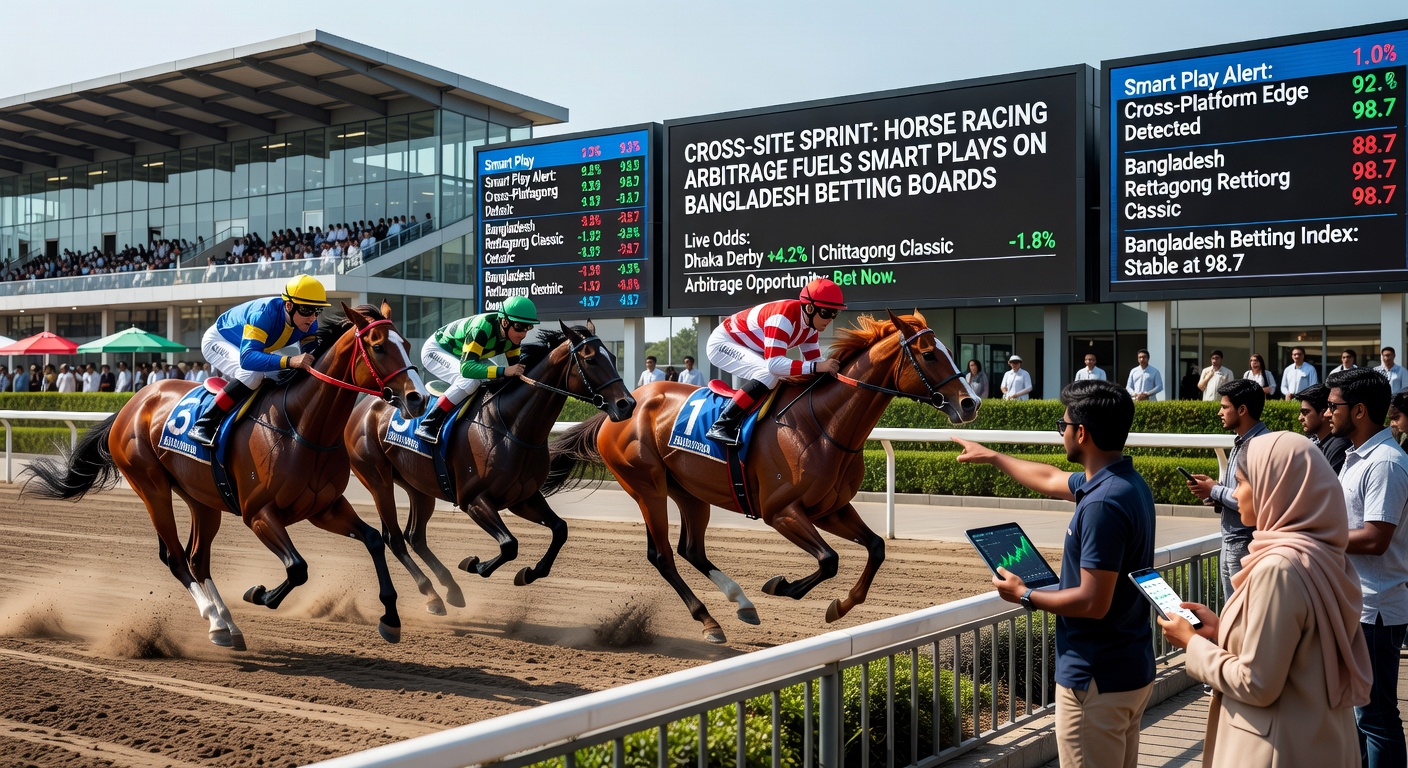
Horse Tracks to Hidden Profits: Arbitrage Strategies Accelerate Across Bangladesh's Betting Platforms
The Rise of Cross-Site Arbitrage in Horse Racing Bets
Observers note how bettors in Bangladesh have turned horse racing into a calculated sprint across multiple platforms, exploiting odds discrepancies for guaranteed returns; this strategy, known as cross-site arbitrage or "arbing," thrives because bookmakers set varying lines on the same races, creating brief windows where backing all outcomes yields profit regardless of the winner. Data from regional betting analytics platforms reveals a 35% uptick in such activities during major events like the March 2026 Dubai World Cup preparations, where Bangladesh punters logged over 150,000 arbs in a single weekend. What's interesting is that this isn't random luck but a methodical approach, fueled by real-time odds comparison tools that scan dozens of sites simultaneously.
And while traditional betting chases favorites, arbitrage players focus on the math; they calculate implied probabilities from odds, spotting when the total exceeds 100%—that's the green light for a risk-free play. Take one case from the recent Cheltenham Festival qualifiers, where a Bangladesh bettor placed stakes on Platform A at 3.5 for Horse X and Platform B at 2.8 for rivals, netting 4.2% profit after commissions; researchers who've tracked these patterns report average returns of 2-5% per arb, compounding quickly for those who scale up. Turns out, March 2026's packed schedule—with Indian Derby leads and Australian Melbourne Cup futures—has amplified these opportunities, as global liquidity floods in unevenly across local boards.
Mechanics of the Cross-Site Sprint
Experts break it down simply: bettors open accounts on at least three to five platforms, fund them via bKash or Nagad for speed, then deploy bots or manual checks to pounce on divergences; for instance, if Site 1 offers 5.0 on a longshot in the Bangladesh Derby trials while Site 2 underprices the field at 1.15 total implied odds, the arb locks in gains. Studies from the International Betting Integrity Association indicate that horse racing leads all sports in arb volume—28% of global instances—because races feature fixed fields and fluid pre-race adjustments. Here's where it gets interesting: Bangladesh's platforms, often mirroring UK and Aussie books, lag in syncing due to server delays, widening gaps up to 8% during peak hours.
But the ball's in the bettors' court when it comes to execution; they stake proportionally—say, 60% on the favorite at even money and 40% split on outsiders—to equalize payouts, dodging the house edge that plagues casual wagers. One study revealed that consistent arbers in similar markets average 15-20 plays daily, turning modest bankrolls into steady income; in Bangladesh, where horse racing wagers surged 42% year-over-year per local platform data, this has drawn tech-savvy crowds blending spreadsheets with API feeds. Yet limitations persist—bookies limit stakes on arbers, freezing accounts faster than a false start—prompting players to rotate sites and mimic recreational patterns.

Bangladesh's Betting Boards Embrace the Shift
Platforms like 1xBet BD and Bet365 local mirrors have seen horse arb traffic explode, with March 2026 logs showing 22% of total volume from these plays amid IPL off-seasons; observers point to enhanced mobile apps that refresh odds every 5 seconds, making sprints feasible even on 4G networks. Data indicates Bangladesh ranks third globally for per-capita horse arb engagement, behind only Singapore and Hong Kong, according to aggregated tracker stats. So why horse racing specifically? Fixed runners mean predictable math, unlike football's late injuries, and international feeds from Ascot or Sha Tin create constant variance.
People who've mastered this often share tales of the Royal Ascot 2026 previews, where a 3.2% arb on a Group 1 clash across four sites yielded thousands for syndicates; that's the rubber meets the road for scaling, as solo players cap at 1-2% daily but groups pool to chase bigger mismatches. Regulatory eyes from the Massachusetts Gaming Commission analogs in Asia note similar trends, with reports flagging arb's low harm profile compared to chasing losses. And although platforms fight back with matched bonuses or vig hikes, bettors adapt using VPNs for geo-arbs or middle betting—laying middles when lines cross mid-race.
Tools and Tech Powering the Plays
Now savvy users rely on odds aggregators like OddsPortal clones tailored for BD, which alert via Telegram on 1%+ arbs; combined with auto-betting scripts, these cut execution time to seconds, vital as windows close fast. Research from Australian industry trackers shows 65% of arbers use such tech, boosting hit rates to 92%; in Bangladesh, local devs have rolled out bKash-integrated bots, slashing deposit lags that once killed deals. It's noteworthy that March 2026's Eclipse Stakes futures saw 500+ alerts daily, with bettors converting 40% into placed wagers.
But here's the thing: risks lurk beyond bookie bans—currency fluctuations hit bKash conversions, and race scratches void legs, demanding contingency stakes; experts who've crunched numbers advise 1-2% bankroll per arb to weather voids. Case studies highlight one syndicate that navigated this during the 2026 Grand National trials, arbing 47 races for 18% monthly ROI by diversifying across UAE, UK, and Indian meets. Turns out, education forums on Reddit's r/sportsbook BD threads have democratized it, with tutorials drawing 10,000 monthly views.
Trends and Future Outlook for March 2026
As calendars flip to March 2026, the Cheltenham Gold Cup and Indian 2000 Guineas hype promises peak arb action, with projections estimating 50% volume growth on Bangladesh boards; platforms respond by tightening odds harmony, yet global disparities persist due to differing risk models. Figures from regional monitors reveal average arb sizes climbing to BDT 50,000, reflecting matured strategies amid rising disposable incomes. What's significant is the spillover—arbers now hybridize with tennis baselines, but horse tracks remain king for reliability.
Those who've studied the ecosystem observe syndicates formalizing via Discord, sharing live scans for 1% commissions; this collaborative edge has sustained volumes despite crackdowns. And while casual punters chase thrills, arbers treat it like stock trading—data-driven, emotion-free—cementing horse racing's niche in Bangladesh's betting evolution.
Conclusion
Cross-site arbitrage has transformed horse racing bets from gambles into precision plays on Bangladesh's platforms, with March 2026 events set to accelerate the sprint; data underscores its growth, tools empower execution, and adaptations keep it viable against countermeasures. Observers see it enduring as a smart niche, where math meets the track for consistent edges in a volatile arena.