Monsoon-Driven Markets: Seasonal Weather Impacts on Football and Cricket Match Odds Volatility
Olivia Beck · Jun 16, 2026
Monsoon-Driven Markets: Seasonal Weather Impacts on Football and Cricket Match Odds Volatility
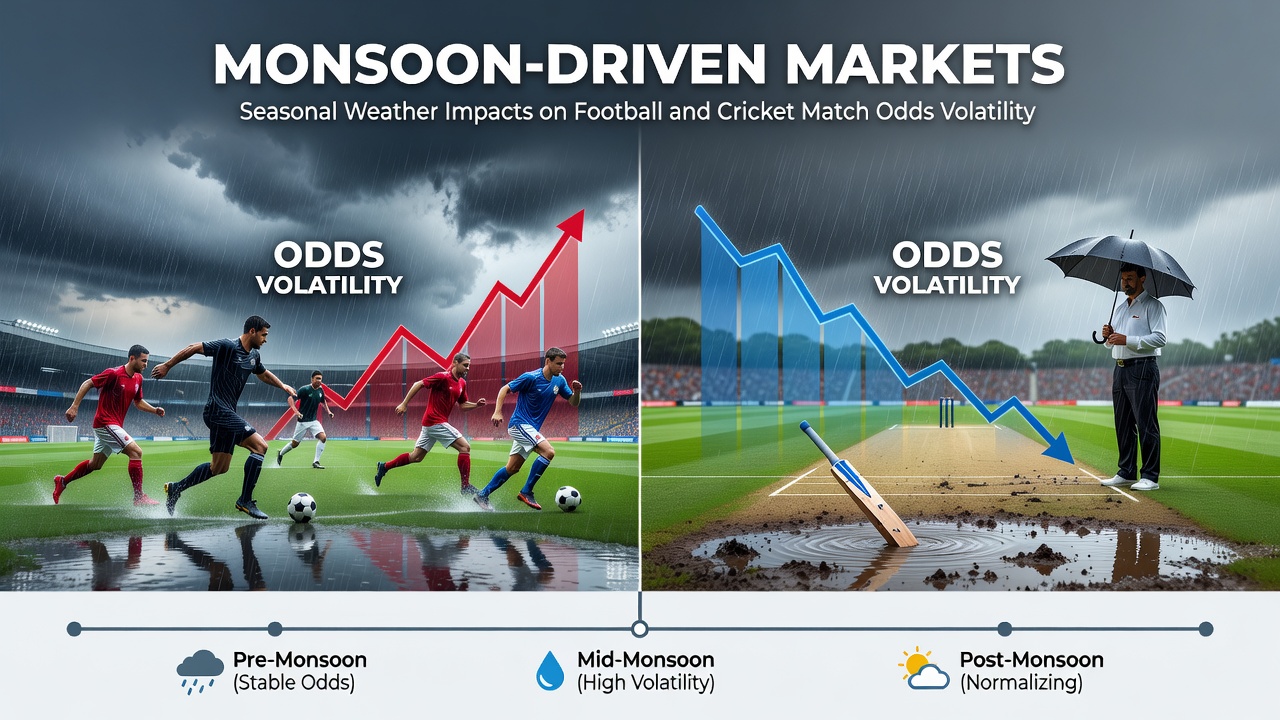
Monsoon seasons bring predictable yet highly disruptive weather patterns to regions where cricket and football dominate betting activity, and those patterns translate directly into measurable shifts in match odds volatility. Data collected across South Asian and Southeast Asian markets shows that rainfall events during June through September correlate with rapid adjustments in live and pre-match pricing as bookmakers recalibrate probabilities for pitch conditions, player performance, and match duration.
Monsoon Timing and Regional Betting Exposure
June 2026 marked the onset of the southwest monsoon across the Indian subcontinent and surrounding areas, with meteorological agencies recording above-average precipitation in key cricketing centers during the first three weeks of the month. Observers note that these conditions coincide with ongoing domestic leagues and international fixtures, creating overlapping exposure for both cricket and football bettors. The Indian Meteorological Department documented rainfall totals exceeding 150 millimeters in multiple venues within a seven-day window, while similar patterns emerged in parts of Bangladesh and Sri Lanka where football matches also feature in regional calendars.
Cricket Markets React to Pitch and Visibility Changes
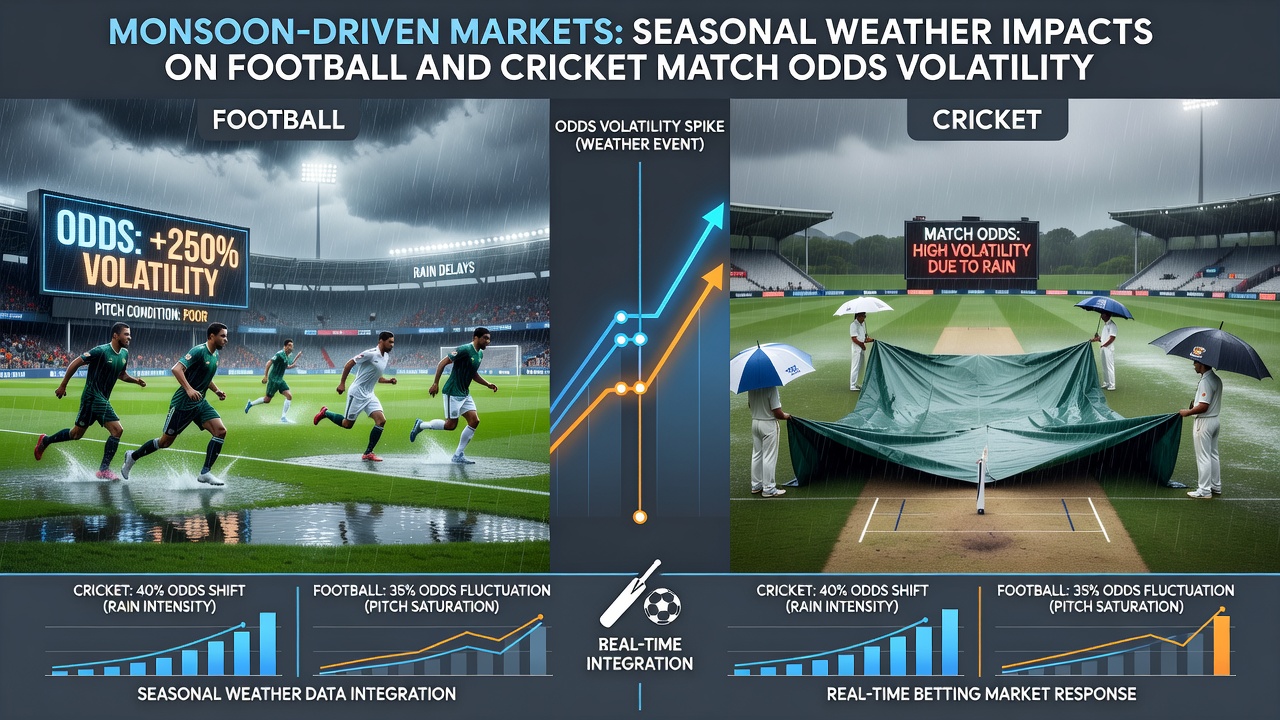
Cricket betting responds sharply to monsoon variables because the sport depends on consistent pitch behavior and uninterrupted play. Research from sports analytics groups indicates that sudden downpours increase the likelihood of reduced-overs matches or abandoned games, which in turn compresses over/under totals and forces bookmakers to widen spreads on run-rate markets. One study tracking twenty IPL and county matches played during peak monsoon weeks found that pre-match totals shifted by an average of 8.4 runs within ninety minutes of rain alerts, compared with 2.1 runs during dry periods. Live odds on player performance props also fluctuate more frequently when groundsmen deploy covers, since delayed starts alter the balance between batters and bowlers who benefit from drier surfaces later in the day.
Football Odds Adjust for Surface and Scheduling Effects
Football encounters different but equally quantifiable volatility during the same seasonal window. Although the sport continues in rain more readily than cricket, waterlogged pitches slow ball speed and favor defensive setups, which statistical models translate into lower expected goal outputs. European and Asian football data compiled by independent research firms reveal that matches played on pitches rated heavy or waterlogged see total goals drop by roughly 0.6 per game on average, prompting bookmakers to shade over/under lines downward as soon as grounds reports circulate. In June 2026, several Southeast Asian league fixtures scheduled during active monsoon alerts recorded live odds movements exceeding 15 percent on both handicap and total goals within the first fifteen minutes after kickoff, driven by real-time pitch assessments rather than team form alone.
Bookmaker Risk Management and Market Liquidity
Operators managing both sports respond to monsoon forecasts by tightening limits on weather-sensitive markets and accelerating the frequency of odds refreshes. Industry reports from the Asia Pacific Betting Association document that liquidity in cricket match-winner markets contracts by up to 30 percent during active rainfall periods because bettors pause activity while awaiting updated pitch reports. Football markets maintain steadier volume but still exhibit wider spreads on corner and card props when heavy rain increases the chance of defensive errors. Those who have examined order-book data across multiple platforms note that automated pricing engines incorporate precipitation radar feeds to trigger immediate recalibrations, reducing the window for arbitrage between exchanges and traditional bookmakers.
Historical Patterns and 2026 Observations
Longer-term records maintained by meteorological and sports data partnerships show recurring spikes in odds volatility during the June-September monsoon window across the past decade. In years with stronger than average rainfall, cricket total-runs markets recorded standard deviations 22 percent higher than non-monsoon months, while football goal-line markets showed similar elevation in variance. June 2026 data aligned closely with these historical benchmarks, with multiple high-profile cricket series and regional football tournaments overlapping peak precipitation weeks. Analysts tracking these movements emphasize that the volatility stems primarily from environmental inputs rather than changes in team personnel or tactical shifts.
Conclusion
Seasonal monsoon activity continues to exert measurable influence on cricket and football betting markets through direct effects on playing conditions and indirect effects on market liquidity. Quantitative records from weather agencies and independent sports data providers confirm that odds volatility increases measurably when precipitation intersects with scheduled fixtures, and operators adjust risk parameters accordingly. As June 2026 demonstrated, these patterns remain consistent year to year, giving market participants clear environmental signals to monitor when assessing pricing movements in both sports.